Shifts in Regulatory Frameworks Reshaping Multi-Hand Video Poker Availability Through Cross-Industry Alliances

Regulatory adjustments across multiple jurisdictions have started to influence how multi-hand video poker games reach players, and these changes often trace back to partnerships that span technology providers, financial services, and traditional gaming operators. Data from industry reports shows that operators now navigate updated licensing requirements in several regions, which in turn affects the distribution models for multi-hand variants that allow simultaneous play across multiple hands on a single screen.
Observers note that alliances between software developers and payment processors have accelerated compliance with new standards for responsible gaming features. These collaborations typically incorporate real-time monitoring tools that track session length and betting patterns, features that align with evolving rules in North American and European markets. Research indicates that such integrations became more common after mid-2025 updates to digital transaction protocols, prompting companies to share compliance infrastructure rather than build separate systems.
Key Regulatory Developments in 2026
By July 2026 several state-level agencies in the United States had finalized amendments that require enhanced age-verification layers for online poker platforms offering multi-hand formats. These rules emerged after consultations with both gaming associations and financial technology firms, leading to standardized APIs that operators now deploy through joint ventures. Figures from the American Gaming Association reveal that multi-hand titles experienced a measurable uptick in certified deployments once these shared verification systems reduced onboarding friction for licensed sites.
Similar patterns appear in Canadian provinces where iGaming Ontario introduced updated technical standards earlier in the year. Partnerships between provincial regulators and international game suppliers allowed multi-hand video poker to remain available under stricter payout transparency requirements. The alliances reportedly cut certification timelines by roughly 30 percent compared with prior independent approval processes.
Cross-Industry Partnerships Driving Availability
Technology companies specializing in random number generation have formed agreements with banking networks to embed transaction monitoring directly into game clients. This approach satisfies data-protection mandates while maintaining the speed that multi-hand formats demand. Evidence from technical white papers shows that these embedded systems flag irregular play without interrupting the multi-hand interface, a development that operators credit for smoother market entry in regulated environments.
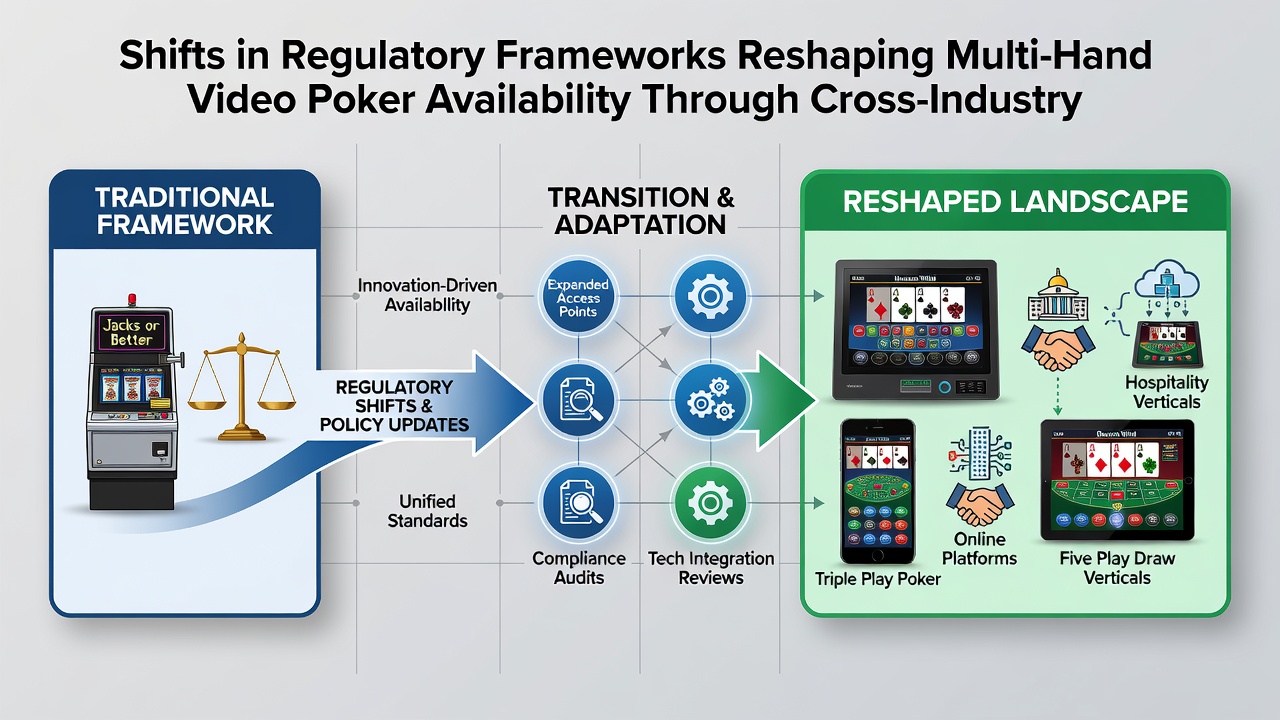
Payment providers have also contributed by adapting their risk-assessment algorithms to accommodate the higher transaction volumes typical of multi-hand sessions. Joint working groups between these providers and gaming studios produced modular compliance kits that smaller operators can license, reducing the capital needed to launch compliant multi-hand offerings. Data compiled by the Australian Gambling Research Centre highlights increased participation from mid-sized operators following the release of these kits in early 2026.
Impact on Game Distribution and Player Access
Availability has shifted toward platforms that maintain active partnerships with both regulatory technology vendors and established casino networks. Multi-hand video poker titles now appear more frequently on sites that integrate unified reporting dashboards, because these systems satisfy the audit demands of multiple jurisdictions simultaneously. Those who track distribution patterns report that standalone operators without such alliances face longer review periods before new variants receive approval.
Regional differences persist. Markets that adopted shared licensing frameworks earlier show steadier growth in multi-hand options, whereas jurisdictions still developing independent oversight structures continue to see slower rollouts. Industry analysts point to the role of cross-border data-sharing agreements in smoothing these transitions, noting that participating operators can reference compliance certifications obtained in one region when applying elsewhere.
Future Outlook for Multi-Hand Formats
Continued evolution of regulatory technology suggests that additional alliances will form around artificial intelligence tools designed to detect problem gambling within multi-hand environments. Early pilots conducted through university-affiliated research programs have already produced preliminary datasets that regulators in several regions are reviewing. These datasets focus on session metrics unique to multi-hand play, such as decision speed across simultaneous hands, and they may inform the next wave of technical standards.
Operators and technology partners are therefore positioning themselves to meet anticipated requirements rather than reacting after rules change. The pattern indicates that collaborative infrastructure investments will remain central to maintaining access to multi-hand video poker across regulated markets.
Conclusion
Regulatory shifts combined with cross-industry alliances have produced measurable changes in how multi-hand video poker reaches licensed platforms. Partnerships that pool compliance resources have shortened approval cycles and expanded the range of operators able to offer these games under updated standards. Data collected through mid-2026 shows sustained availability in regions that embraced shared technical frameworks, while slower progress persists where such collaborations remain limited. The trajectory points to further integration between gaming, financial, and regulatory technology sectors as the primary mechanism shaping future access.