Partnerships and Algorithmic Adjustments Driving Changes in Video Poker Payout Systems
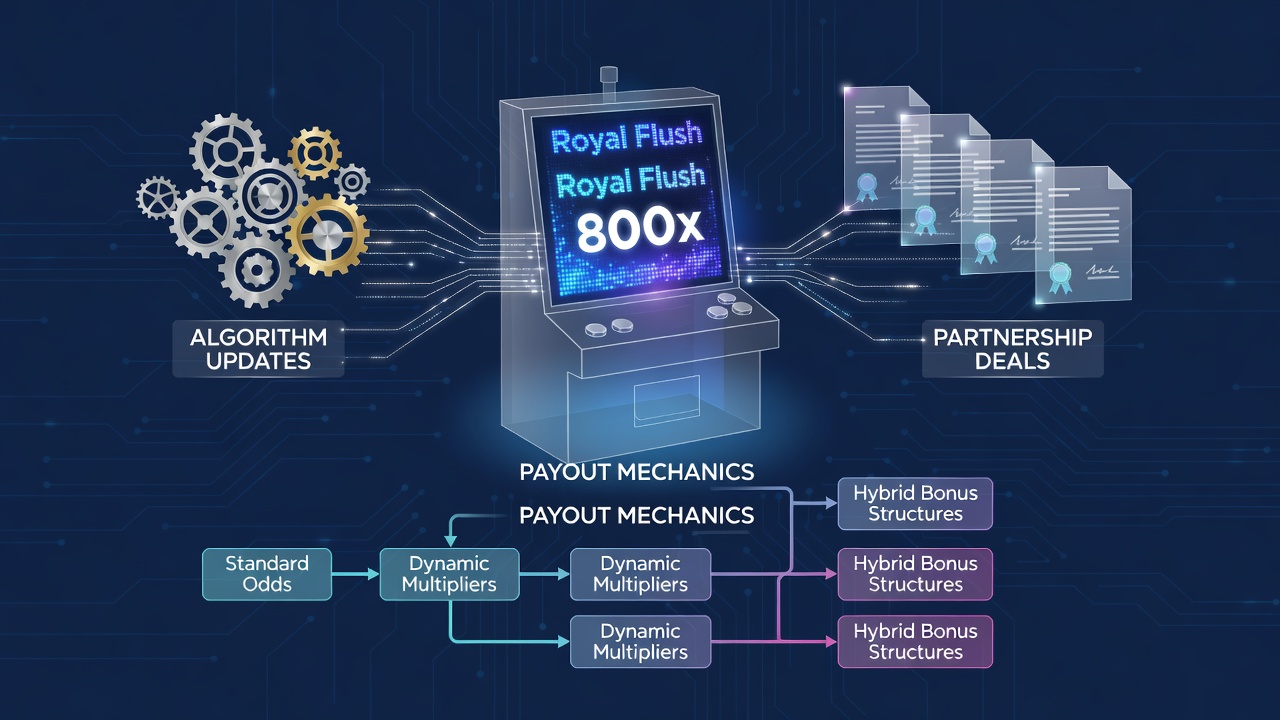
Video poker payout mechanics have undergone measurable shifts in recent years as software developers refine random number generator algorithms while simultaneously entering new commercial agreements with casino operators and platform providers, and these developments continue to unfold through mid-2026.
Algorithm Refinements and Their Direct Effects on Payout Tables
Developers adjust core algorithms to meet updated regulatory standards for randomness and return-to-player percentages, which in turn requires recalibration of payout tables across multiple video poker variants including Jacks or Better, Deuces Wild, and Double Double Bonus Poker. Research from the University of Nevada, Reno Gaming Innovation Lab shows that incremental changes to pseudorandom sequence generation can alter hit frequencies on specific hand rankings by fractions of a percent, prompting operators to revise published payout schedules accordingly.
These technical updates rarely occur in isolation, because licensing contracts often stipulate that new algorithm versions must be deployed across partner networks within defined timeframes, and such clauses have accelerated the pace at which revised payout structures reach player-facing platforms.
Strategic Partnerships Reshaping Distribution of Updated Games
Commercial alliances between game studios, payment processors, and multi-state casino groups have created pathways for synchronized rollout of algorithmically updated titles, and one notable example involves a 2025 agreement between a major North American software provider and several regional operators that standardized a 0.3 percent increase in theoretical return across select video poker titles. Data compiled by teh Ontario Lottery and Gaming Corporation indicates that similar partnership-driven deployments reached Canadian online platforms in the first half of 2026, resulting in documented adjustments to progressive jackpot seeding formulas.
Observers note that these deals frequently include provisions for shared data analytics, allowing partners to monitor how algorithm tweaks influence session length and wager distribution in real time, which then feeds back into further refinements.
Regulatory Oversight and Cross-Border Alignment
Gaming control agencies in multiple jurisdictions have responded to the combined influence of algorithmic change and partnership activity by issuing joint guidance documents, and the Australian Communications and Media Authority coordinated with state regulators in June 2026 to publish technical specifications that require pre-approval of any payout table modification stemming from partnership agreements. Compliance documentation must now detail both the algorithmic basis for new return percentages and the commercial terms that govern distribution rights.

Similar alignment efforts appear in European markets, where the Malta Gaming Authority has required operators to submit algorithm audit summaries alongside partnership contract summaries before any revised video poker product receives certification for local players.
Player-Facing Consequences and Industry Adaptation
Players encounter these changes primarily through modified paytables and occasional shifts in jackpot contribution rates, and industry reports indicate that average return percentages for popular video poker variants have stabilized within a narrow band following the most recent wave of algorithm updates. Partnerships have also enabled operators to bundle updated video poker titles with loyalty program integrations, allowing real-time tracking of how payout adjustments affect player retention metrics across different demographic segments.
Technical teams at both developer and operator levels now routinely collaborate on simulation testing that models the combined impact of algorithmic parameters and commercial revenue-sharing arrangements, producing datasets that regulators review during certification processes.
Future Trajectories Through Late 2026
Additional partnership announcements scheduled for the second half of 2026 are expected to incorporate machine-learning elements into payout calibration routines, and preliminary filings with the New Jersey Division of Gaming Enforcement outline plans for dynamic adjustment mechanisms that respond to aggregated play data while remaining within predefined regulatory bands. These developments continue the established pattern in which technical and commercial factors interact to determine the precise structure of video poker payouts available to end users.
Conclusion
The ongoing convergence of algorithm updates and partnership frameworks continues to define how video poker payout mechanics evolve, with measurable effects on return percentages, regulatory compliance procedures, and distribution timelines across multiple markets. Documentation from government agencies and academic research centers provides the factual basis for tracking these adjustments as they progress through 2026 and beyond.